
Creative Expression
When Anyone Can Make a Song, What Makes an Artist Valuable?
AI is changing the economics of music. It may also make the human story behind the music more important than ever. — Human Agency in the Age of AI, Part 04

Damesha Craig
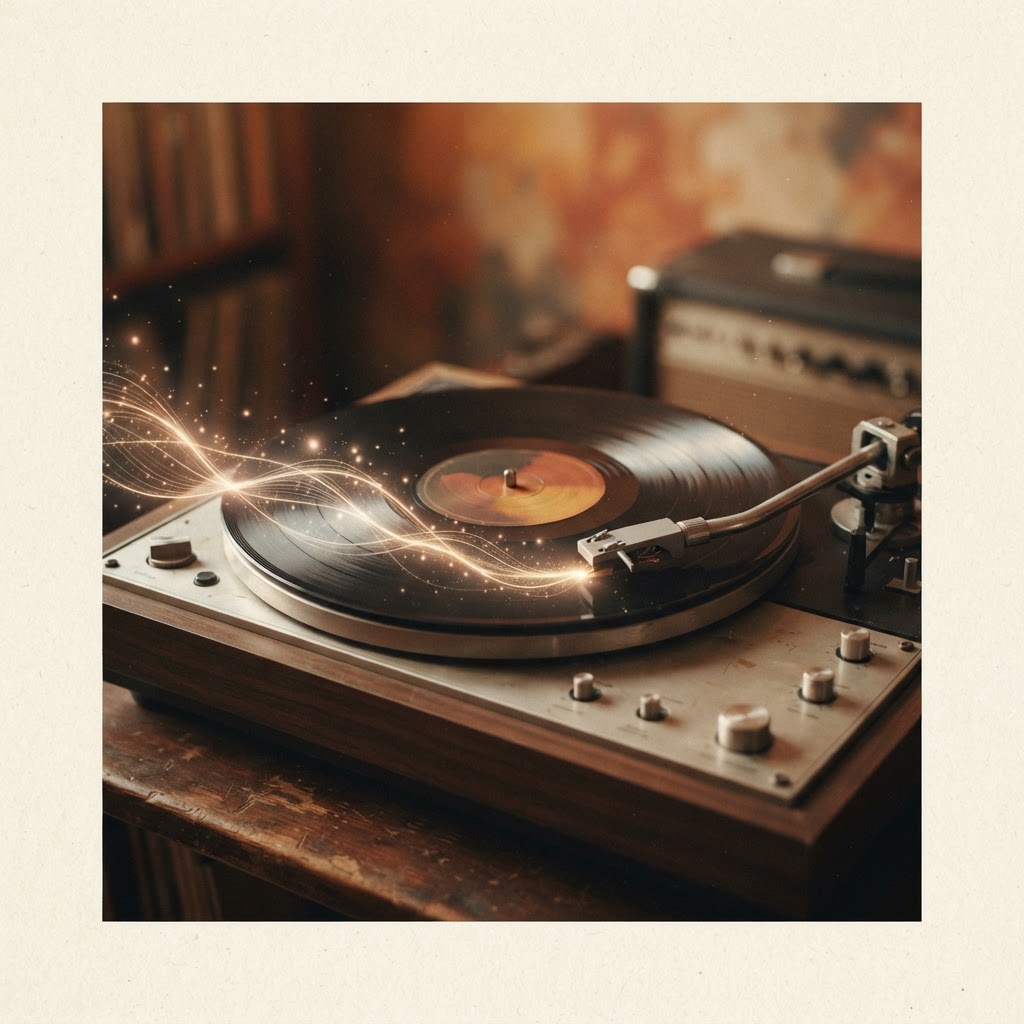
There was a time when music could disappear.
Before recordings, a song lived in the moment it was performed. In a church. Around a fire. At a celebration. In a field. In a theater. In someone's home. Music traveled through people, through memory, oral tradition, live performance and eventually through written notation and sheet music.
If you wanted to hear a musician, someone had to make the music.
Then something extraordinary happened. We learned how to capture sound.
In 1877, Thomas Edison developed the phonograph, the first machine capable of both recording and playing back sound. For the first time, a performance didn't have to disappear when the room became quiet. Music could travel without the musician. That changed everything.
Records made music collectible. Radio made it broadcastable. Cassettes made it portable. CDs made it digital. Downloads separated the song from the album. Streaming separated access from ownership.
And now artificial intelligence may be doing something even more fundamental: It is separating the creation of music from the traditional requirements of being a musician.
A prompt can become music. Which raises a question I think we're going to spend the next decade answering: When almost anyone can make a song, what makes an artist valuable?
Every Technological Shift Changed Who Could Participate
It is easy to look at AI and believe music has never experienced disruption like this before. That's not entirely true.
Technology has been disrupting music almost from the moment we figured out how to record it. The phonograph changed live performance. Radio changed distribution. Records changed ownership. Home recording changed production. MTV changed the importance of image. Digital downloads changed albums. Streaming changed the economics of listening. Social media changed discovery. TikTok changed how quickly a few seconds of a song could become culturally significant.
Each transition brought anxiety alongside opportunity. Something was gained. Something was lost. Someone who previously controlled the gate suddenly had less control over it. And someone previously standing outside the gate found a way in.
AI belongs to that lineage. But this moment feels different because previous technologies largely changed how human-created music was recorded, distributed, discovered or consumed. Generative AI can participate in the creation itself. Lyrics. Melodies. Vocals. Instrumentation. Production. Arrangement. Entire songs. And it can do it at a scale human beings cannot match.
We Are Moving From Scarcity to Abundance
For most of music history, creating a professional recording required resources. Technology steadily lowered those barriers. A laptop became a studio. A smartphone became a camera. Social media became a distribution channel.
AI is lowering the barrier again. But this time, the scale is difficult to comprehend. In July 2026, Deezer reported receiving approximately 90,000 fully AI-generated tracks every day. At peak levels, AI-generated music represented more than 50% of all new tracks delivered to the platform. And yet those tracks accounted for only about 1% to 3% of total listening.
Those numbers reveal something important. The supply of music is becoming nearly infinite. Human attention isn't. We may soon live in a world where producing another song is incredibly easy. Producing something people care about may become incredibly difficult.
Music Isn't Disappearing. It Is Growing.
It would be easy to interpret the rise of AI as evidence that the traditional music industry is collapsing. The current numbers don't support that conclusion.
Global recorded music revenues reached $31.7 billion in 2025, an all-time high and the industry's eleventh consecutive year of growth. Streaming generated more than $22 billion and represented 69.6% of global recorded music revenue.
And something else happened that I find particularly interesting. Physical music grew too. Global physical revenues increased 8% in 2025, while vinyl revenue rose 13.7%, marking vinyl's nineteenth consecutive year of growth.
We can access millions of songs instantly. And people are still buying records. Why? Perhaps because convenience isn't the only thing humans value. We also value ritual. Objects. Memory. Identity. Belonging. The experience of holding something made by someone whose work means something to us.
A vinyl record doesn't win against streaming because it is more efficient. It wins because efficiency isn't always the point.
When Music Becomes Abundant, Meaning Becomes Scarce
AI will get better. AI-generated vocals will become more convincing. Personalized music may become commonplace. A listener may eventually be able to request: Give me something soulful, reflective and hopeful for my drive home after a difficult day. And receive a completely original song created specifically for that moment.
That is technologically fascinating. But there is another question: Will you care who made it?
Because there is a difference between enjoying a sound and caring about an artist. We don't only fall in love with songs. We fall in love with stories. We remember where an artist came from. We watch them struggle. We watch them evolve. We associate albums with seasons of our own lives. We travel to concerts. We wear merchandise. We debate lyrics. We wait for releases. We introduce their music to our children.
That relationship is bigger than audio. And I suspect that relationship may become considerably more valuable in an AI-saturated world.
The Artist May Become More Valuable Than the Song
For decades, the song was the primary product. Then streaming transformed music into access. Now AI may push us toward another transition: The relationship may become the product.
The artist represents a point of view. A story. A body of work. A community. A cultural identity. Taste. Trust. A lived experience. There is provenance attached to the work. This person made this. Those four words may matter more than we realize.
Because when machines can generate an endless number of technically competent songs, knowing where something came from becomes meaningful. Technology can reproduce patterns. It can increasingly generate beautiful outputs. But the artist brings context. And context is part of what turns creative output into culture.
So How Will Artists Make Money?
If music becomes easier to generate and the supply becomes effectively unlimited, what happens to musicians trying to make a living? The artists who thrive may increasingly build an ecosystem around the music rather than expecting recordings alone to support the entire career. The song becomes the beginning of the relationship rather than the entirety of the business.
AI Could Also Become a New Revenue Stream
What if AI doesn't only compete with artists? What if artists can license themselves into AI ecosystems? Warner Music Group has outlined three principles for its AI agreements: models should be licensed, economic terms should reflect the value of music, and artists should have a choice about whether their name, image, likeness or voice can be used. In May 2026, Spotify and Universal Music Group announced licensing agreements for a generative-AI tool allowing fans to create authorized covers and remixes. Universal has continued with a multi-year agreement with ElevenLabs.
But Who Owns the Artist?
If someone's voice can be replicated, what does it mean to own your voice? The American Federation of Musicians filed a federal lawsuit in June 2026 against Universal Music Group, Atlantic Recording Corp. and Warner Records. In late September, Sony and Universal filed another lawsuit against AI music company Suno. The industry is negotiating the terms under which AI belongs: Who consents? Who owns? Who gets credited? Who gets paid?
Live Music May Become Even More Human
There is another part of music AI cannot replicate: Being there. Standing in a room with thousands of people when the lights go down. Hearing the first note of a song you have loved for ten years. Those experiences aren't simply audio delivery. They are presence. And presence may become a premium experience in an increasingly synthetic world.
The Future of Music May Be More Human Than We Think
The phonograph once separated the musician from the room. Radio separated music from geography. Streaming separated listening from ownership. AI is beginning to separate music from the musician. And perhaps the next chapter will be about putting the human being back into the center of the relationship.
We may be entering an era in which making a song becomes easier than ever. Making someone care may become harder. And perhaps the artists who thrive won't simply be the people who can produce the most music. They will be the people who create worlds we want to enter. Stories we want to follow. Communities we want to join. Experiences we want to remember.
Because when anyone can make a song, the most valuable thing an artist brings may no longer be simply the song. It may be themselves.
Read This Story
Enter your email to read this season's stories — and receive seasonal inspiration delivered to your inbox.
About the Author
Damesha Craig
Damesha Craig, Curator-in-Chief of The Soul Fueler Journal™, Leadership Coach, Founder of Leadership Garden Ecosystem™, and Host of Sunday SoulDay
Soul Fueler Community
Did this stir something in you?
Continue the conversation with fellow Soul Fuelers. Share your reflections, ask questions, and grow together in our community space.
Join the Conversation ✦Reader Reflections
No reflections yet. Be the first to share yours.